
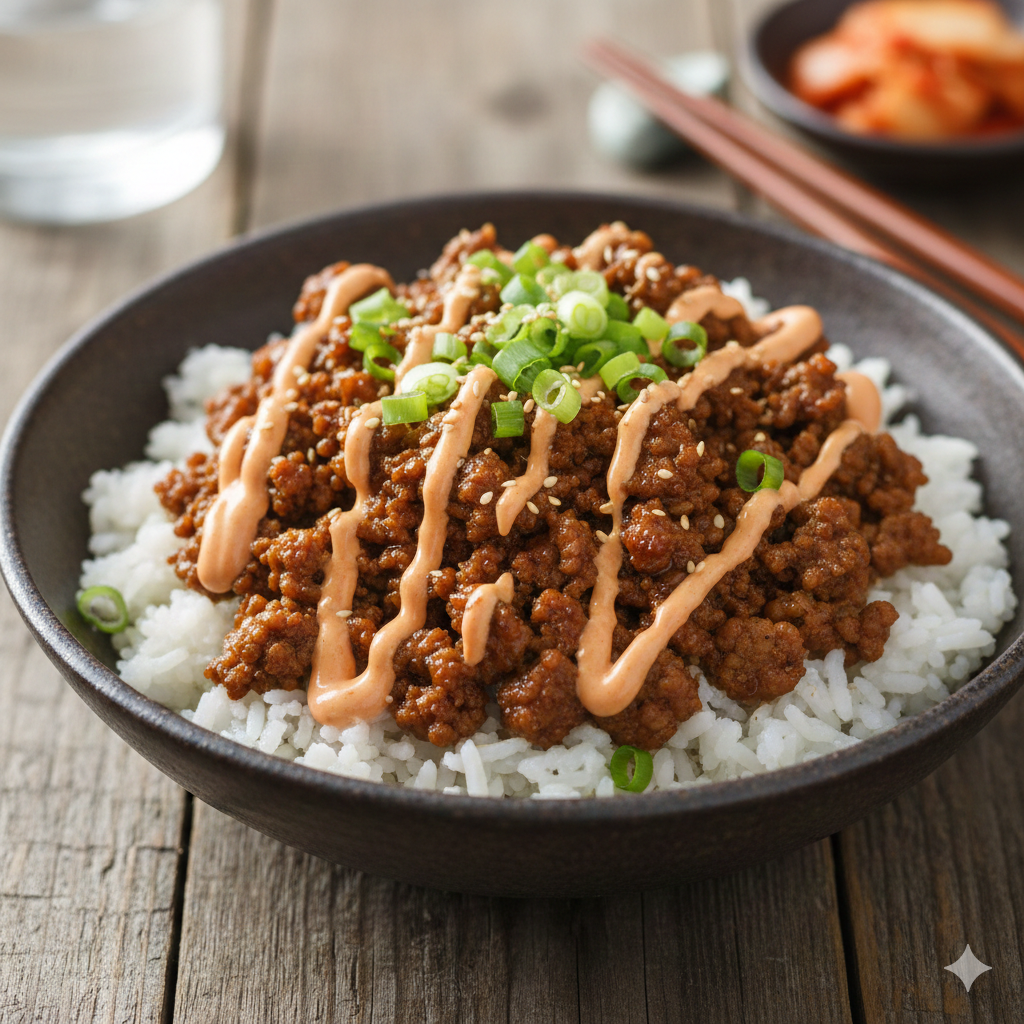
Korean Spicy Beef Bowl

Servings: 1 Total Time: 20 mins
Maximum Spice, Minimum Calories: A High-Protein Power Meal
pinit

Korean Spicy Beef Bowl

Prep Time 10 mins Cook Time 10 mins Total Time 20 mins
Servings: 1 Estimated Cost: $ 4 Calories: 350
Best Season: Suitable throughout the year

Description

Bold, spicy, and savory. This recipe features a signature Gochujang glaze that caramelizes over tender beef, balanced with the freshness of wilted greens. By using a natural sugar substitute and a cauliflower base, we’ve stripped away the "hidden" calories of traditional Bulgogi without losing that iconic Korean street-food kick.

Ingredients

Instructions

  1. Prep the Sauce:

    In a small bowl, whisk together the gochujang, soy sauce, sweetener, garlic, ginger, and sesame oil. If it's too thick, add 1 tablespoon of water.

  2. Brown the Beef:

    Heat a non-stick skillet over medium-high heat (use a quick spray of oil if needed). Add the beef and break it into small crumbles. Cook until browned and no longer pink.

  3. Glaze:

    Pour the sauce over the beef. Stir-fry for 2–3 minutes until the sauce thickens and coats the meat in a sticky, spicy glaze.

  4. The Base:

    In a separate pan (or the microwave), lightly steam the cauliflower rice.

  5. Assemble:

    Place the rice in a bowl, top with the spicy beef, and add your greens.

Note

Top with a fried egg (sunny side up). The runny yolk acts as a creamy sauce that balances the heat, and it adds another 6g of high-quality protein!

Keywords: korean, spicy, beef, asian
Did you make this recipe?

Tag #wpdelicious and #deliciousrecipesplugin if you made this recipe. Follow @wpdelicious on Instagram for more recipes.

Pin this recipe to share with your friends and followers.

pinit
Recipe Card powered by WP Delicious

Frequently Asked Questions

Expand All:

Can I use a different protein besides beef?

Absolutely. If you want to lower the saturated fat even further, Ground Turkey (99% lean) or Ground Chicken works great. Just be sure to add an extra splash of soy sauce or a tiny bit more ginger, as poultry can be blander than beef.

I don’t have Gochujang. Is there a substitute?

While Gochujang has a unique fermented depth, you can mimic the heat by mixing Sriracha with a pinch of red pepper flakes and a dash of miso paste (if you have it) for that salty, fermented funk.


How do I make the cauliflower rice taste less "vegetably"?

The secret is dry-frying. Don't boil or steam it in a bag. Toss the riced cauliflower into a hot, dry pan for 3–5 minutes before adding anything else. This evaporates the moisture and removes the "cabbage" smell, giving it a texture closer to real grain.


How can I add even more volume without adding calories?

If you are still hungry, "bulk" the bowl with:

  • Shredded Cabbage: Sauté it with the beef; it wilts down and absorbs the sauce perfectly.

  • Zucchini: Diced small and tossed in.

  • Mushrooms: They have a "meaty" texture and almost zero calories.

Is Gochujang gluten-free?

Most traditional Gochujang contains wheat or barley. If you are gluten-sensitive, look for a specific "Gluten-Free" certified label, or use a mix of chili flakes, honey, and Tamari (gluten-free soy sauce).

Samantha Doe Food and Lifestyle Blogger

Hi, I'm Samantha, a full-time food blogger, mother of 2 beautiful daughters and a lovely wife. I live in New Jersey with my family. Loves traveling, sharing new recipes, and spending time with my family.

Leave a Comment

Your email address will not be published. Required fields are marked *